How to Play D&D
At its core, D&D is just storytelling with your friends with rules.
The DM (that’s me) describes the world—what you see, hear, and what’s happening around you. You tell me what your character does. Then the rules and dice decide how that plays out.
That’s it really :)
The Flow of the Game
Most of the time, the game moves like this:
1. I describe the situation
You’re in a dusty saloon. A man at the bar hasn’t stopped staring at you. The piano suddenly goes quiet.
2. You say what you do
Anything goes. Talk to someone, draw a weapon, lie, run, climb out a window—if your character can try it, you can say it.
3. We resolve it
If what you’re doing is risky or uncertain, you’ll roll a d20 (20-sided die), add the stuff on your character sheet if you have them (called modifiers), and see how well you did.
High roll = things go your way
Low roll = things get messy
Then we repeat.
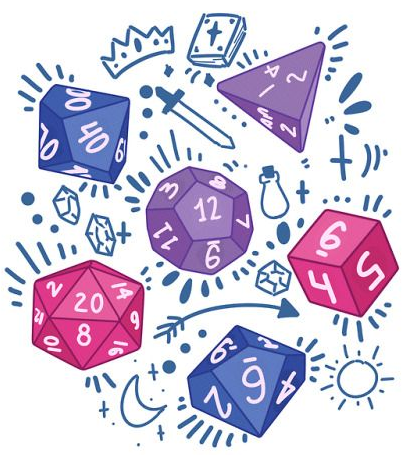
Dice, Very Quickly
You don’t need to memorize anything.
- d20 – used for most important rolls (attacks, skills, saving throws)
- Other dice (d6, d8, etc.) – usually for damage or specific abilities
I’ll tell you what to roll and when.
Roleplaying (Don’t Overthink It)
You don’t have to do voices. You don’t have to act.
Just make decisions like your character would.
If it helps, think:
- “What do I want?”
- “What am I willing to risk?”
That’s roleplaying.
You’re not trying to beat the game—you’re here to experience a story.
Sometimes things go perfectly. Sometimes everything falls apart. Both are fun.
Trust me, some of the best moments come from bad rolls.
Table Vibe
- You can try almost anything.
- Creativity > rules lawyering
- I’ll handle the mechanics, you focus on decisions
- Work together (this isn’t a solo game)
If you’re ever unsure what to do—just say what your character tries to do.
We’ll figure out the rest.